
Quick Answer
The choice between sewer repair and replacement depends on what is actually wrong with the pipe. A localized damaged section may be repairable. Widespread deterioration, repeated failures or damage in several areas may point toward replacing a larger section. The decision should follow diagnosis, not come before it.
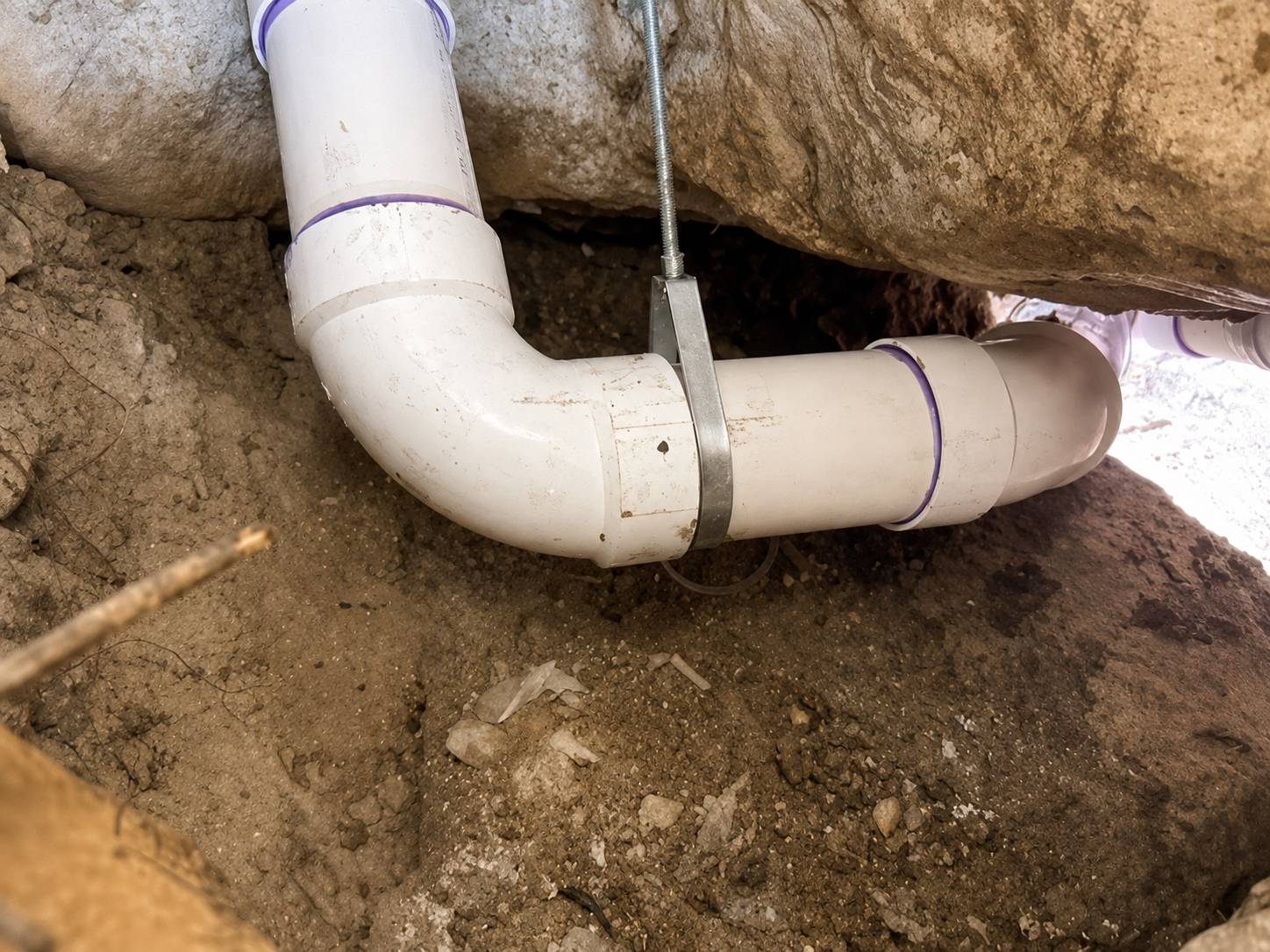
Start with the condition of the line
Several factors carry more weight than the symptom itself: where the damage is, how long a section is affected, the pipe material, the depth and routing, whether roots are involved, and what previous repairs exist on the same line.
Two homes with identical backups can need very different work depending on those answers.
A localized problem may stay localized
When the issue is confined to one section, the surrounding pipe still looks serviceable on camera, and access is workable, a targeted repair addresses the actual problem without disturbing the rest of the line.
This is common with a single cracked section, one offset joint, root intrusion at a specific joint, or damage caused by outside work such as fence posts or landscaping.
Widespread problems change the conversation
Deterioration along a longer run, multiple damaged areas, a pipe material that is failing generally rather than at one point, sagging sections that hold water, or a history of repeated repairs on the same line all point toward replacing a larger portion.
In those cases repeated spot repairs can cost more over time than addressing the run, which is a practical judgment rather than a rule.
Why camera inspection matters to this decision
Camera footage, where the line can be accessed and traveled, provides visual evidence of what conditions exist and roughly where. That is what allows a repair scope to be described honestly instead of estimated from symptoms.
Anyone recommending a full replacement without having looked inside the line is guessing, and so is anyone promising a small repair before the line has been seen.
Questions worth asking before you approve work
Reasonable things to ask
- What did the camera show, and can I see it?
- Approximately where along the line is the problem?
- Is the surrounding pipe in comparable condition?
- What access or excavation does this scope require?
- What happens if we repair the section and the rest of the line is older?
- How will drainage be tested when the work is finished?
What you can gather first
- The history of backups and clearings on this line, with rough dates.
- Any previous repair records or invoices for sewer work.
- The approximate age of the home and any additions or remodels.
- Whether ground along the sewer route is wet, soft or sinking.
- Whether large trees sit near the suspected sewer path.
What not to do
- Do not approve a replacement scope before seeing what the inspection found.
- Do not keep paying for repeat clearings on a line that has known damage.
- Do not dig or expose piping yourself before utilities are located.
- Do not assume the oldest pipe material always has to be replaced. Condition matters more than age alone.
What a plumber may check
- Camera footage of accessible sewer piping and where conditions appear
- Pipe material, joints and transitions
- Depth, routing and what access the work would require
- Whether standing water indicates a sag or a low section
- Root intrusion points and the surrounding pipe condition
- Drainage behavior before and after any clearing
When to watch it and when to call
- Repair is often reasonable
- One identified section is damaged, the rest of the line looks serviceable, and access is workable.
- Replacement deserves discussion
- Damage appears in several places, the line has failed repeatedly, or the material is deteriorating along its length.
- Decide after inspection
- The line has never been seen on camera. Get the visual evidence before committing to either scope.
Bottom Line
Repair suits a localized, identified problem in a line that is otherwise serviceable. Replacement suits widespread deterioration or repeated failures. Since only inspection can tell those apart, the sensible order is look, understand, then decide, and it is fair to ask to see the footage that supports the recommendation.
Related questions homeowners ask
How long should a sewer line last?
Service life varies widely with material, installation, soil conditions and what has happened around the line, which is why condition is evaluated directly rather than estimated from age.
Can roots be cleared instead of repairing the pipe?
Clearing roots restores flow, but roots enter through an opening. If that opening remains, the intrusion tends to return.
Does replacing part of a line always mean digging up the yard?
Access depends on depth, routing, what is above the line and the method used. What the work requires should be explained before it starts.
Relevant service: Sewer Repair
Diagnose and repair damaged, blocked, deteriorated, or compromised sewer lines.
Learn about Sewer RepairReviewed by
Andy Fauver
Texan Plumbing Pros
13+ years of plumbing and leak detection experience
Published September 16, 2026. Last reviewed September 16, 2026.