
Quick Answer
A sewer camera inspection can be useful when a drain or sewer problem keeps returning, several fixtures are affected, the location of a problem is unclear or the condition of an accessible sewer line needs to be seen directly. A camera provides visual evidence inside the line, but it does not diagnose every possible plumbing issue by itself.
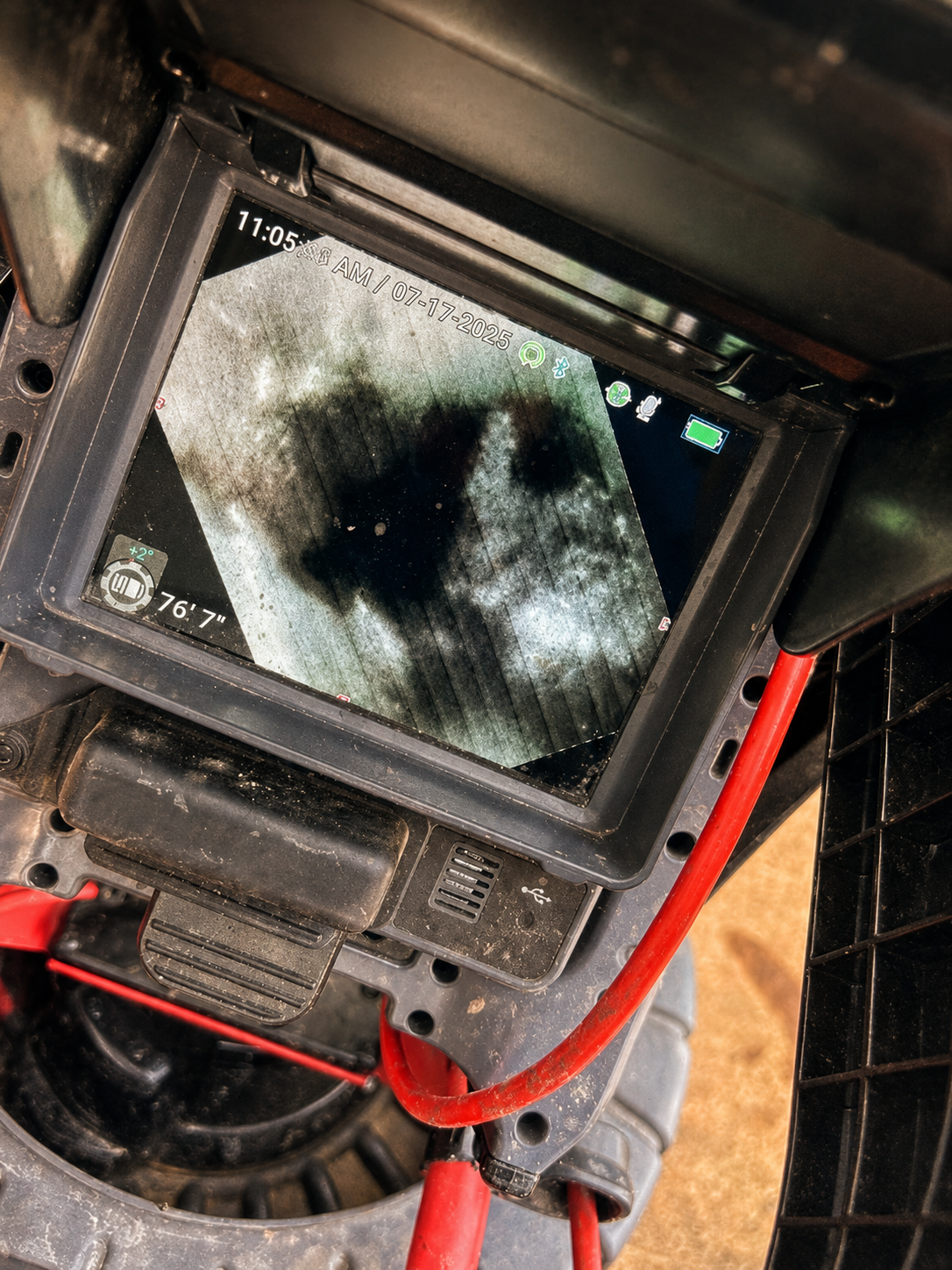
What a sewer camera can show
Depending on access and the condition of the pipe, a camera may reveal blockages and heavy buildup, standing water indicating a low or sagging section, visible cracks or breaks, offset or separated joints, root intrusion at joints, collapsed sections, and material transitions where older piping meets newer work.
It also shows what is normal, which is useful in its own right. Confirming that a line looks sound redirects attention elsewhere instead of prompting unnecessary excavation.
When it becomes especially useful
Situations where looking inside the line pays off
- A drain or sewer line that has needed clearing more than once
- Several fixtures affected at the same time
- Sewer odor or gurgling that persists after simpler causes are ruled out
- Wet, soft or sunken ground along the sewer route
- Deciding between a section repair and a larger replacement
- Evaluating an older home before purchase or before a remodel that will be hard to access later
Access is what makes it possible
A camera needs a way into the line, usually an accessible cleanout. Layout, fittings, tight bends, the pipe's condition and standing water all affect how far the camera can travel and how clearly it can see. A heavily blocked line often has to be cleared before the camera can show anything useful, which is why clearing and inspecting are frequently sequential rather than either-or.
What it does not replace
A camera is one diagnostic tool, not a complete evaluation. It does not measure water pressure, find pressurized supply leaks, evaluate venting, or judge fixture condition. Findings still have to be interpreted alongside symptoms, pipe routing, depth, material and access.
What happens after the inspection
The useful outcome is not the video itself. It is understanding what the visible condition means, whether it explains the symptom you called about, and what should reasonably happen next. Footage that shows a single damaged section leads to a very different conversation than footage showing deterioration along an entire run.
What to have ready
- A list of which fixtures have had problems and when.
- How many times the line has been cleared and by whom, if known.
- The approximate age of the home and any known plumbing work.
- The location of any cleanout you are aware of, indoors or outside.
- Notes on yard conditions along the suspected sewer route.
What a plumber may check alongside the camera
- Drainage behavior at each affected fixture
- Cleanout access and whether the line holds water
- Whether clearing is needed before the camera can travel
- Pipe material and transitions along the route
- Depth and routing, which affect any repair discussion
- Related STAR Method points such as corrosion and water damage
When to watch it and when to call
- Probably not needed yet
- A single fixture clogged once, cleared easily, and the rest of the house drains normally.
- Worth scheduling
- The same line has been cleared repeatedly, multiple fixtures are involved, or you need to know the condition of the line before making a repair decision.
- Do it as part of the visit
- There has been a main-line backup, or there is wet or sunken ground along the sewer route.
Bottom Line
A camera inspection is most valuable when a problem repeats, when several fixtures are involved, or when the condition of the line is what you actually need to know. It requires access, it works best on a line that can be traveled, and its value comes from what the footage means rather than from the footage itself.
Related questions homeowners ask
Can a camera find a water leak?
No. Cameras travel inside drainage and sewer piping. Pressurized water leaks are investigated with different methods.
Do I need to be home during the inspection?
It helps, because seeing the footage and hearing what it shows in real time is most of the value.
Can every sewer line be inspected?
Not always. Access, fittings, bends, standing water and pipe condition can limit how far a camera reaches.
Relevant service: Camera Inspections
Use video inspection equipment to locate blockages, damage, deterioration, and hidden conditions inside plumbing and sewer lines.
Learn about Camera InspectionsReviewed by
Andy Fauver
Texan Plumbing Pros
13+ years of plumbing and leak detection experience
Published September 16, 2026. Last reviewed September 16, 2026.