
Quick Answer
When several fixtures begin draining slowly or backing up at the same time, the problem may be in a shared branch or the home's main sewer line rather than at one individual fixture. Stop adding unnecessary water to the drainage system and have the condition evaluated, especially if toilets, tubs or floor drains are backing up.
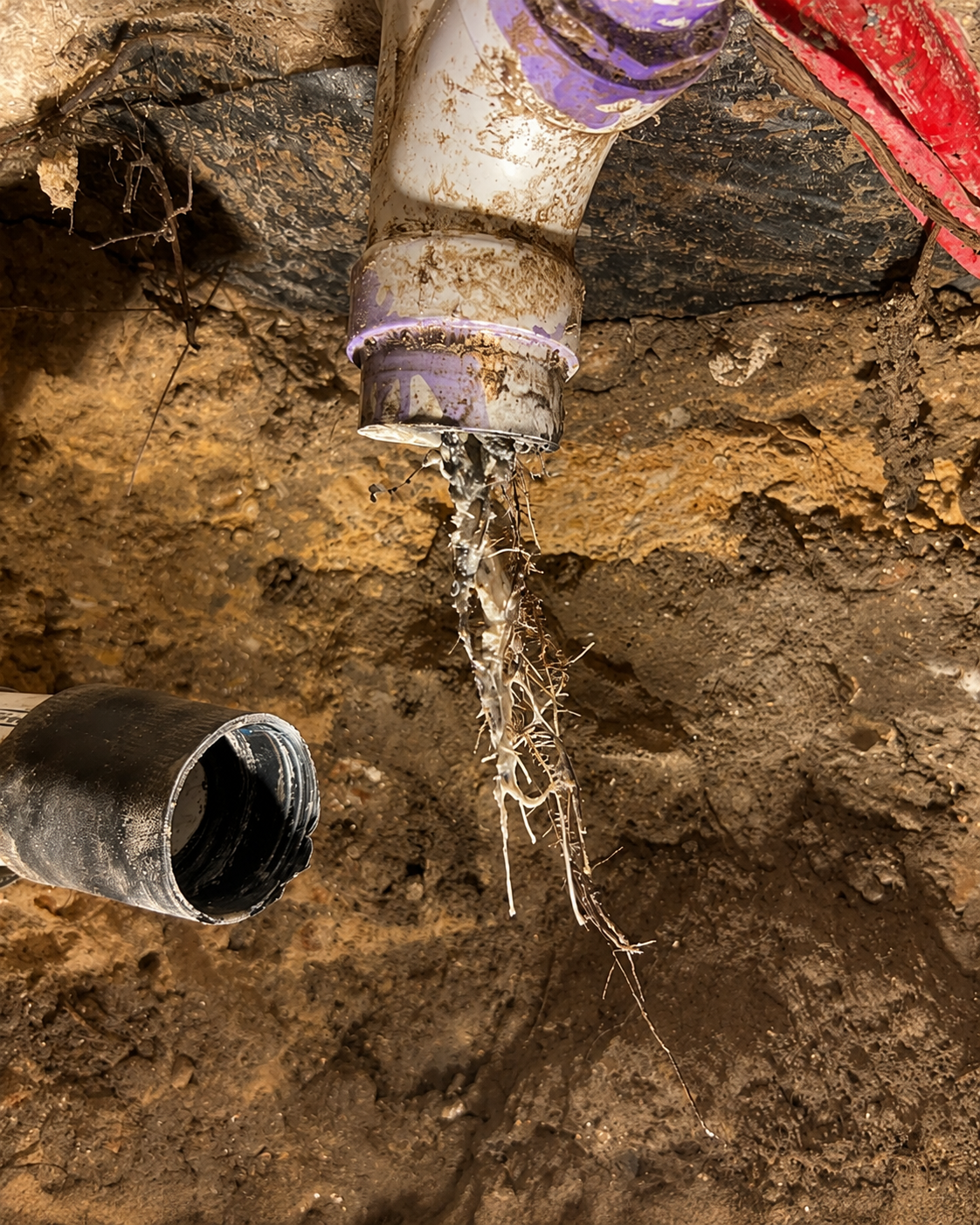
Why multiple fixtures matter
Fixtures do not each have their own path to the street. They join into progressively larger branch piping and finally into the home's main sewer line. A restriction near one fixture affects that fixture. A restriction downstream affects everything above it.
So the question is not which drain is worst. It is how far down the shared path the symptoms begin.
Watch the lowest fixtures in the house
Tubs, showers and floor drains sit lowest in the drainage system, so when a main line is restricted, they are often where water appears first. Water surfacing in a downstairs shower when an upstairs toilet is flushed is a classic pattern for a main-line problem.
In a two-story home, note whether the ground floor is affected while the upper floor still drains. In a single-story home, note whether the affected fixtures are on one side of the house or spread across it.
Limit water use immediately
Every gallon that goes down a drain while a restriction exists has to go somewhere. Continuing normal laundry, dishwashing and showering adds volume behind the blockage and increases the chance that it comes up inside the home.
Hold off on the washing machine and dishwasher in particular, since both discharge a large volume quickly.
Sewage inside the home is a cleanup concern too
Wastewater that backs up into a tub or onto a floor is a sanitation issue as well as a plumbing one. Keep children and pets away from the area, avoid contact, and plan on proper cleanup and disinfection of affected surfaces once the plumbing side is resolved.
What a plumber may inspect
The evaluation usually starts with accessible cleanouts and how the system behaves when water is introduced. From there it may involve clearing the main line and, when appropriate, a camera inspection to see what allowed the restriction to form. That second step is what distinguishes a temporary fix from an explanation.
What you can check first
- List every fixture that is affected and every one that still drains normally.
- Note whether the lowest fixtures in the home are the worst.
- Stop using the washing machine and dishwasher until the condition is evaluated.
- Look outside for a cleanout and note whether water is standing at it or overflowing.
- Check the yard along the sewer route for wet or sunken ground.
- Note whether this has happened before and how it was handled.
What not to do
- Do not keep running water hoping it will clear itself.
- Do not pour chemical drain products into a main-line backup.
- Do not remove a cleanout cap while the line is under a head of water.
- Do not walk through or handle standing wastewater without protection.
- Do not use fixtures on the upper floor while the lower floor is backing up.
What a plumber may check
- Which fixtures share the affected branch and where the pattern begins
- Accessible cleanouts and whether the line is holding water
- Main line clearing and how drainage responds afterward
- Camera inspection of accessible sewer piping to identify the cause
- Signs of root intrusion, offsets, sags, damage or heavy buildup
- Yard conditions along the sewer route
When to watch it and when to call
- Schedule an inspection
- Two or more fixtures have become slow over time, but nothing has backed up into the home.
- Stop using the plumbing and call
- Waste or water is coming up into a tub, shower, floor drain or toilet, or a cleanout is overflowing outdoors.
- Treat as urgent
- Backup is spreading into living space, affects a home with only one bathroom, or recurs immediately after being cleared.
Bottom Line
Several drains failing together generally points to shared piping or the main sewer line rather than any one fixture. Reduce water use right away, note which fixtures are involved and which are not, and have the line evaluated. Clearing it restores flow, and a camera inspection is what explains why it happened.
Related questions homeowners ask
Why does the shower back up when I flush the toilet?
Both connect to shared drainage. If a restriction sits downstream, water from the toilet takes the easiest available opening, which is often the lowest fixture nearby.
Is a main-line backup an emergency?
It is urgent when wastewater is entering the home or when the only bathroom is unusable. Slow drainage without a backup is serious but usually schedulable.
Will clearing the line prevent it from happening again?
Clearing restores flow. Whether it returns depends on what caused the restriction, which is why the inspection after clearing matters.
Relevant service: Sewer Repair
Diagnose and repair damaged, blocked, deteriorated, or compromised sewer lines.
Learn about Sewer RepairReviewed by
Andy Fauver
Texan Plumbing Pros
13+ years of plumbing and leak detection experience
Published September 16, 2026. Last reviewed September 16, 2026.