
Quick Answer
Parts of the Houston region have expansive clay soils that can swell when moisture increases and shrink as they dry. That movement can affect structures and underground conditions. A plumbing leak can also add water to the surrounding soil. Soil type alone does not prove why a pipe failed, so an underground plumbing problem still needs to be evaluated based on the actual condition of the line.
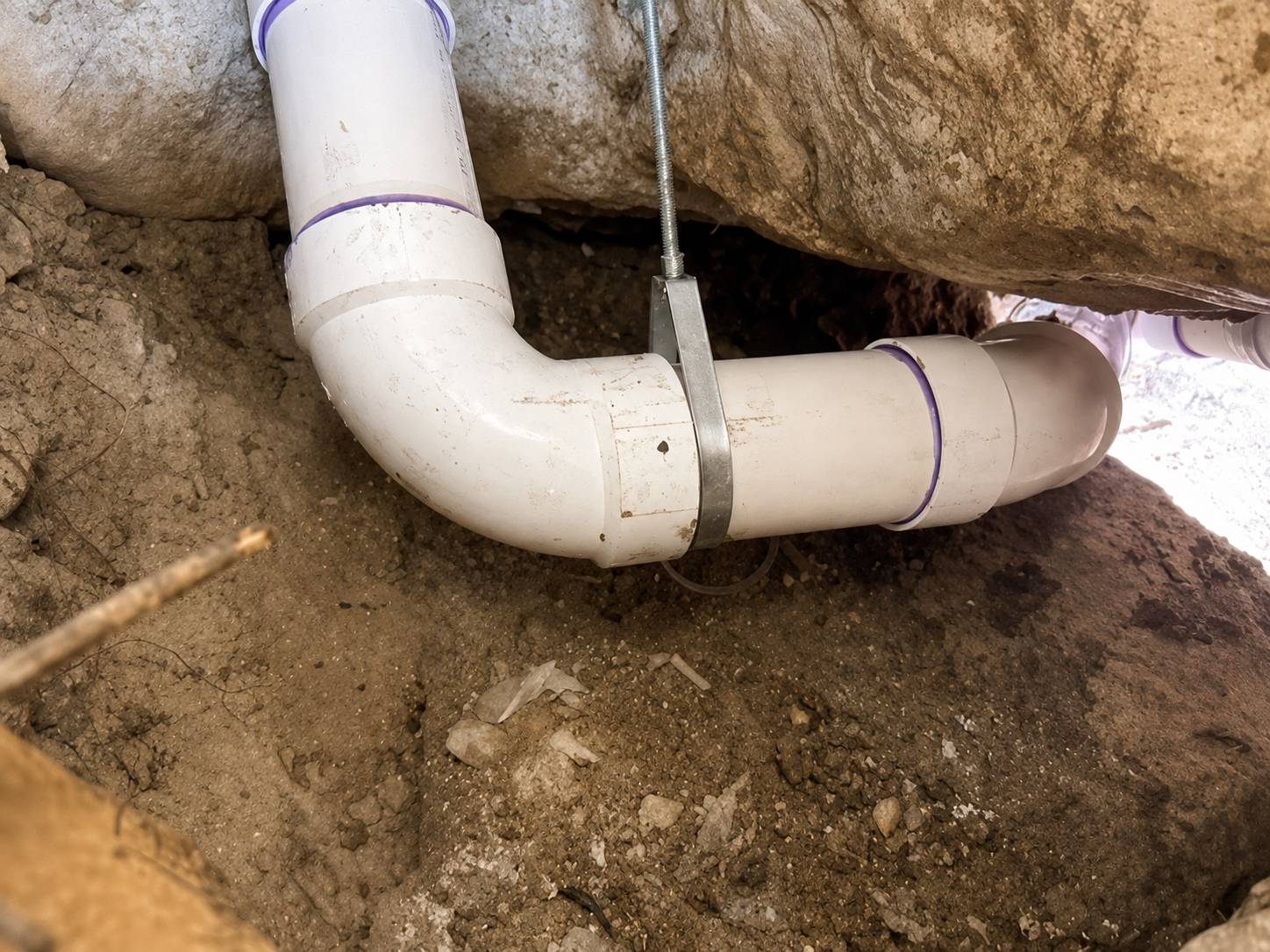
Why Houston-area soil gets attention
City of Houston hazard-planning documentation identifies expansive soils as soils that change volume as moisture conditions change. When they take on water they swell, and as they dry they shrink and can crack.
That cycle is most pronounced during the shift between long dry stretches and heavy rainfall, which the region regularly experiences. Movement of that kind places stress on structures and on the systems routed through the soil around them.
Plumbing leaks can also change soil conditions
The relationship works in both directions. City of Houston geotechnical guidance cautions that leaking plumbing can introduce water into expansive soils, which is one reason unaddressed underground leaks are treated as more than a water-loss issue.
For a homeowner, the practical takeaway is that a leak worth fixing for the water bill may also be worth fixing for what the water is doing to the soil around and beneath the home.
Do not assume the soil caused the problem
Underground plumbing fails for many reasons that have nothing to do with soil type: pipe age and material, installation details, fittings and joints, alignment and slope, root intrusion, damage from later construction or landscaping work, and prior repairs.
Soil is one variable among several. Attributing a failure to clay without looking at the pipe leaves you without the information needed to decide what to actually do.
What this means for older homes in the region
Homes in Bellville and across Greater Houston vary widely in age, original pipe material and how much work has been done to the underground plumbing over the decades. A house that has been through several dry-and-wet cycles with original piping is simply a house where the condition of that piping is worth knowing, rather than assuming.
That is why a camera inspection of accessible sewer piping is often more informative than any general statement about regional soil.
Diagnosis should come first
The useful question is not whether the Houston area has clay soil. The useful question is what condition exists at your home and what the inspected or exposed piping actually shows. That evidence is what determines whether the appropriate answer is a section repair, a larger replacement, or attention to something else entirely.
What you can check first
- Note whether the ground near the home has visibly sunk, cracked or heaved.
- Note whether wet or soggy areas appear in the yard during dry weather.
- Watch for drainage or backup symptoms that come and go seasonally.
- Keep an eye on the water bill and meter, which can flag a pressurized leak.
- Keep gutters and downspouts directing water away from the foundation.
- Record any history of underground plumbing repairs at the property.
What not to do
- Do not accept soil movement as an explanation without an inspection of the piping.
- Do not dig to investigate before utilities have been located and marked.
- Do not let a known underground leak run while deciding what to do about it.
- Do not assume a repaired section means the rest of an aging line was evaluated.
What a plumber may check
- Camera inspection of accessible sewer piping and what it reveals about alignment and condition
- Whether standing water indicates a low or sagging section
- Pipe material, joints and transitions along the route
- Meter behavior and pressure testing for pressurized supply leaks
- Yard and surface conditions along the line's likely route
- Prior repair locations and how the surrounding pipe compares
When to watch it and when to call
- Watch it
- No plumbing symptoms are present and the yard behaves the way the rest of the neighborhood does through seasons.
- Schedule an inspection
- Drainage problems recur, the yard has an unexplained wet or sunken area, or underground plumbing has failed before at this property.
- Address it promptly
- There is a confirmed underground leak, because the water is both a loss and an ongoing addition of moisture to the soil.
Bottom Line
Expansive clay in the Houston region moves with moisture, and plumbing leaks add moisture, so the two interact. That makes an unaddressed underground leak worth resolving, and it also means soil type is never a substitute for seeing the condition of the pipe. Inspect first, then decide.
Related questions homeowners ask
Does clay soil mean my pipes will eventually fail?
No. Soil is one factor among many, and pipe condition depends heavily on material, installation, age and what has happened around the line.
Should I water my foundation during dry spells?
Foundation moisture management is a common regional topic, and questions specific to your foundation belong with a foundation or geotechnical professional rather than a plumber.
Can a plumber tell whether soil movement damaged my line?
An inspection can show what condition the pipe is in and where. Attributing a cause with certainty from the surface is not something anyone should promise.
Relevant service: Leak Detection
Investigate visible and concealed water loss that may contribute to property damage or high water bills.
Learn about Leak DetectionSources reviewed
- City of Houston hazard mitigation documentation on expansive soils.
- City of Houston geotechnical guidance regarding plumbing leaks and expansive soils.
Reviewed by
Andy Fauver
Texan Plumbing Pros
13+ years of plumbing and leak detection experience
Published September 16, 2026. Last reviewed September 16, 2026.