
Quick Answer
A wet area that remains when the surrounding ground is dry may come from irrigation, drainage, a water-service leak or a sewer-line problem. The location, smell, whether water is continuously appearing and what happens at the water meter can help narrow the possibilities. Do not begin digging until underground utilities have been properly located.
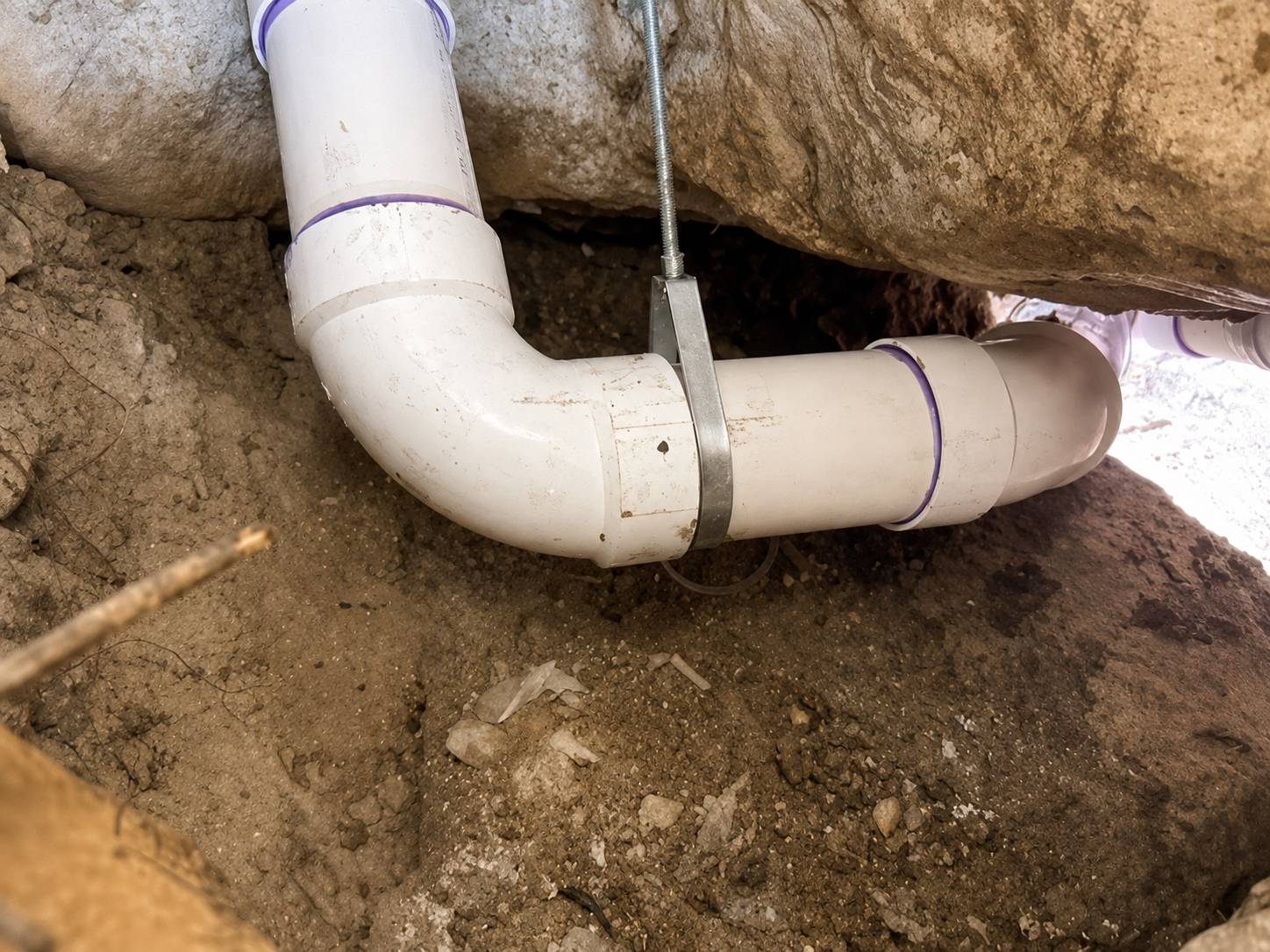
Look at where the water is appearing
Position is the first clue. Moisture near a sprinkler head, valve box or backflow device points toward irrigation components. A wet strip that follows the path between the meter and the house raises questions about the water service line. Wet ground near a cleanout or along the route to the street can suggest a sewer issue instead.
Low areas of a yard also collect runoff from roofs, gutters, downspouts, neighboring property and hardscape. That kind of wet spot is a drainage question rather than a plumbing one, and it usually appears after rain or watering rather than continuously.
Notice whether the area stays wet
Rain and irrigation should eventually dry out. A spot that reappears within a day, stays saturated through dry weather, or produces water you can see moving is behaving differently from ordinary poor drainage.
Try turning the irrigation system off for two or three days. If the area dries out and only returns after a watering cycle, irrigation is a strong candidate. If it stays wet regardless, the supply or sewer side deserves attention.
Check for other symptoms that come with it
A wet yard rarely happens in isolation. An unexplained water-bill increase or continuous meter movement supports a pressurized water leak. Reduced pressure at fixtures can accompany a significant service-line leak. Sewer odor, soft ground over the sewer route, or drains that have been slow or backing up point in a different direction and usually call for a camera inspection rather than pressure testing.
Do not diagnose by digging
Underground electrical, gas, communication and utility lines may run through the same area. Locating the source and the utilities should come before any excavation. In Texas, calling 811 before digging is the standard step for having buried utilities marked.
What you can check first
- Note the exact location and whether it sits along the path from the meter to the house.
- Shut off irrigation for a few days and see whether the spot dries.
- Smell the area. A sewer or waste odor changes what needs to be inspected.
- Check the water meter with all fixtures off and see whether it registers flow.
- Look for water surfacing versus ground that is simply soft, and note whether the patch is growing.
- Check whether any drains inside the home have been slow or backing up.
What not to do
- Do not dig before utilities are located and marked.
- Do not let children or pets play in an area you suspect may involve sewage.
- Do not keep running irrigation over a suspected leak while waiting on a visit.
- Do not fill or top-dress the area, which hides the evidence needed to find the source.
What a plumber may check
- Meter activity and pressure behavior on the water service
- Isolation of the irrigation connection from the domestic supply
- The likely route of the water service and sewer line
- Cleanout access and drainage behavior if sewer is suspected
- Camera inspection of accessible sewer piping where conditions allow
- Surface evidence, soil condition and where water is actually surfacing versus where it originates
Water travels along the path of least resistance underground, so the wet spot is not always directly above the failure.
Read about the five-point STAR MethodWhen to watch it and when to call
- Watch it
- The area appeared after heavy rain or watering, has no odor, and dries out within a couple of days.
- Schedule an inspection
- The spot stays wet with irrigation off, keeps returning, is growing, or comes with a higher bill or meter movement.
- Call right away
- Water is visibly bubbling to the surface, there is a sewage odor, or the ground is sinking near the home's foundation.
Bottom Line
Where the water shows up, whether it stays wet with irrigation off, and what the meter is doing will usually separate irrigation and drainage from a water-service or sewer problem. Gather those observations, keep the area undisturbed, and have the source located before any digging is planned.
Related questions homeowners ask
Can a wet yard mean a sewer problem instead of a water leak?
It can. Sewer-related wet areas often carry an odor and tend to appear along the sewer route or near a cleanout, and they are usually evaluated with a camera rather than pressure testing.
Why is the wet spot not directly over the pipe?
Water follows the easiest path underground, moving along trench backfill or gravel until it reaches a place where it can surface. That is why locating equipment matters more than the visible patch.
Will the grass die if it stays saturated?
Turf can suffer in continuously saturated soil, but the more important concern is water moving under hardscape or toward the foundation.
Relevant service: Leak Detection
Investigate visible and concealed water loss that may contribute to property damage or high water bills.
Learn about Leak DetectionReviewed by
Andy Fauver
Texan Plumbing Pros
13+ years of plumbing and leak detection experience
Published September 16, 2026. Last reviewed September 16, 2026.